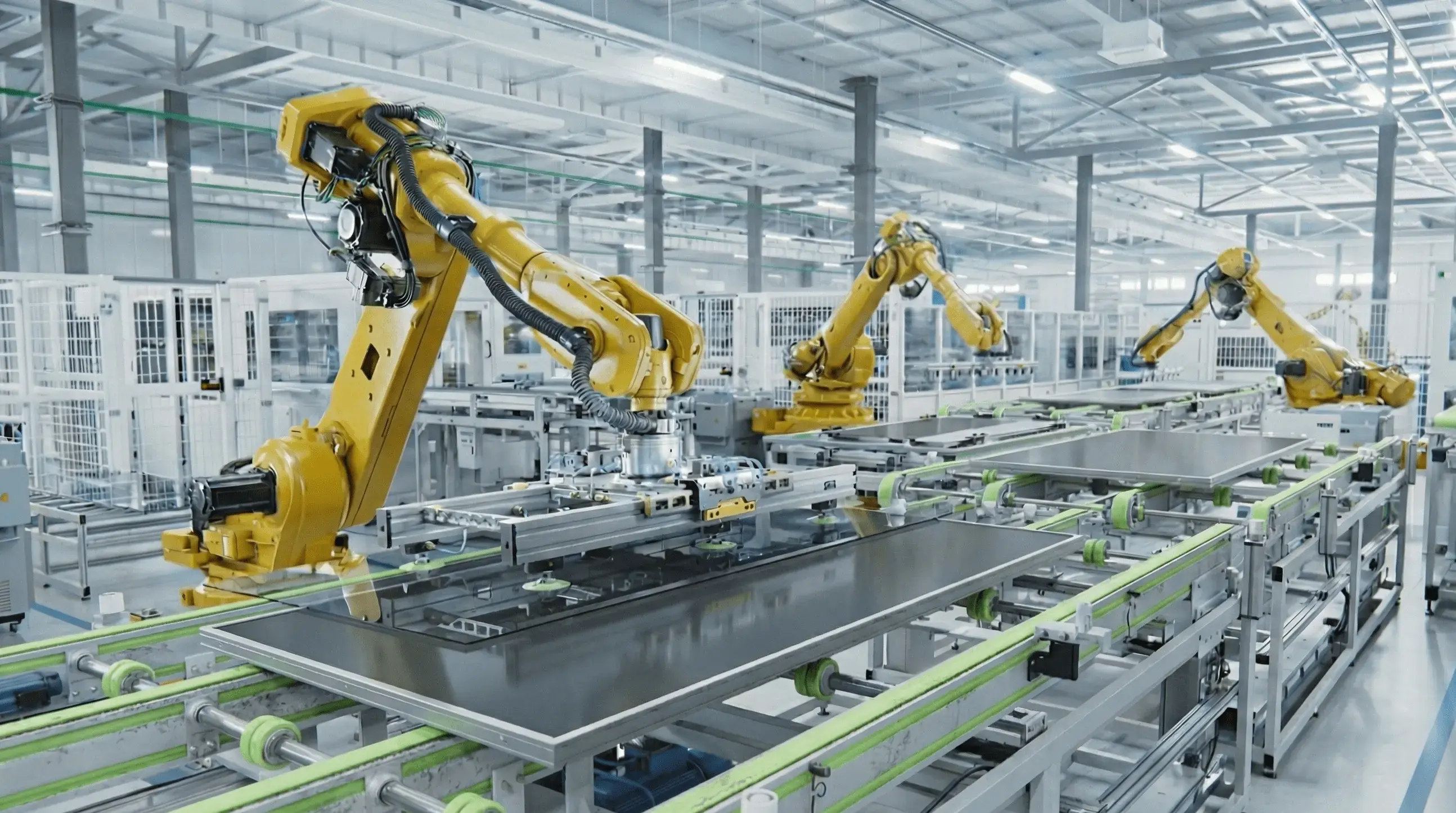
For more than a decade, manufacturing has been in the midst of a digital transformation.
Factories are smarter and more connected than ever. Sensors stream real-time data. Machines predict failures before they happen. Digital twins model outcomes before production begins. From the plant floor to the supply chain, industrial organizations have invested heavily in visibility, automation, and optimization.
But for all this progress, there is a growing blind spot in the transformation story.
While manufacturers have radically modernized how products are made, many still rely on surprisingly analog processes for how products are sold. In an era of smart factories, the buying experience for capital equipment remains one of the least digitized parts of the industrial value chain, and it is increasingly becoming a constraint on growth.
When Digital Transformation Stops at the Plant Gates and Buyers Notice
Digital transformation discussions tend to focus on operations: uptime, throughput, yield, quality, and cost. These investments are essential, but they represent only part of the system.
For many manufacturers and distributors, the path from buyer interest to signed order is still defined by:
- Spreadsheets passed between sales, engineering, and finance
- Configuration logic locked in the heads of a few senior experts
- Manual quoting processes that vary by region or dealer
- Financing introduced late, often after momentum has already slowed
These workflows persist not because leaders do not see the inefficiency, but because complexity has long been accepted as inevitable in industrial sales.
The challenge is that buyers have changed, quietly but fundamentally.
Today’s industrial buyers do not expect a self-checkout experience for a six-figure machine. They do expect clarity earlier in the journey. They want to understand which options are compatible, what tradeoffs exist, and whether a purchase fits within budget before weeks of back-and-forth.
Instead, many encounter opaque pricing, delayed answers, and fragmented information spread across emails, PDFs, and internal approvals. The result is friction at the exact moment buyers are ready to move forward.
Why Sales Friction Is No Longer Just a Sales Problem
In the past, slow or manual sales processes were inconvenient but manageable. Today, they carry real operational and financial consequences.
Several forces are converging:
- Labor shortages are shrinking the pool of experienced sales engineers
- Dealer and distributor networks are harder to standardize and support
- Longer sales cycles delay revenue recognition and strain working capital
- Financing availability increasingly determines whether deals close at all
As a result, the efficiency of selling has become as strategically important as the efficiency of manufacturing. Commercial workflows, configuration, pricing, quoting, and financing, are no longer peripheral processes.
They are part of the same system that governs planning, production, and delivery.
When one side modernizes and the other does not, the entire system slows down.
The Missing Layer of Industrial Digitalization
The first wave of industrial digital transformation focused on making machines observable and predictable.
The next wave is about making decisions, especially buying decisions, equally intelligent.
In operations, manufacturers already rely on AI-driven systems to anticipate failures, optimize performance, and automate responses. A similar shift is beginning to take shape in commercial workflows.
Rather than relying solely on human memory and static rules, manufacturers are starting to explore AI agents trained on machine configuration data, historical quotes, deal outcomes, and financing patterns.
These systems can learn which configurations are valid, which options are commonly bundled, where deals tend to stall, and how affordability impacts conversion.
Over time, this intelligence enables guided decision-making at scale. Buyers are supported as they navigate complex choices. Sales teams are reinforced with recommendations grounded in real outcomes.
The goal is not autonomy for its own sake, but reducing uncertainty across the buying journey with the same rigor applied to production systems.
From Tribal Knowledge to Institutional Intelligence
One of the least discussed risks in industrial sales is how much value lives in people’s heads.
Experienced sales engineers know which configurations work, which options cause downstream issues, and which financing structures resonate with different buyers. But this knowledge is often undocumented, inconsistent, and difficult to scale.
As teams grow, retirements accelerate, and dealer networks expand, this creates fragility.
Digitizing commercial workflows is not about removing expertise. It is about preserving it.
Increasingly, that institutional intelligence is being captured in AI-driven systems that continuously learn from new configurations, quotes, and outcomes. What was once tribal knowledge becomes a shared, evolving asset.
The result is not less human involvement, but better-supported decisions.
What Modern Industrial Selling Looks Like
In a more mature digital sales environment:
- Buyers gain confidence through clarity, not pressure
- Sales teams spend less time correcting quotes and more time advising
- Dealer networks operate from a shared source of truth
- Manufacturers gain visibility into demand patterns earlier in the process
This mirrors the promise of IIoT itself: fewer surprises, faster decisions, and better outcomes across the system.
Importantly, this evolution does not require replacing existing ERP, MES, or CRM investments. It requires extending digital thinking to the commercial edge, where intent turns into commitment.
Completing the Transformation Story
Industrial digital transformation has delivered enormous value by making production smarter, safer, and more efficient.
But transformation is not complete when machines are connected.
It is complete when the entire journey, from initial interest to final delivery, operates with the same level of intelligence and intent.
As manufacturers look for their next competitive advantage, the answer may not be another sensor on the factory floor. It may be applying AI-driven decision systems to the last major source of friction standing between a buyer’s decision and a signed order.
In the next era of industrial leadership, the smartest factories will be paired with equally smart paths to purchase.
And those who close that gap will move faster, not just in production, but in growth.